13.07.2026
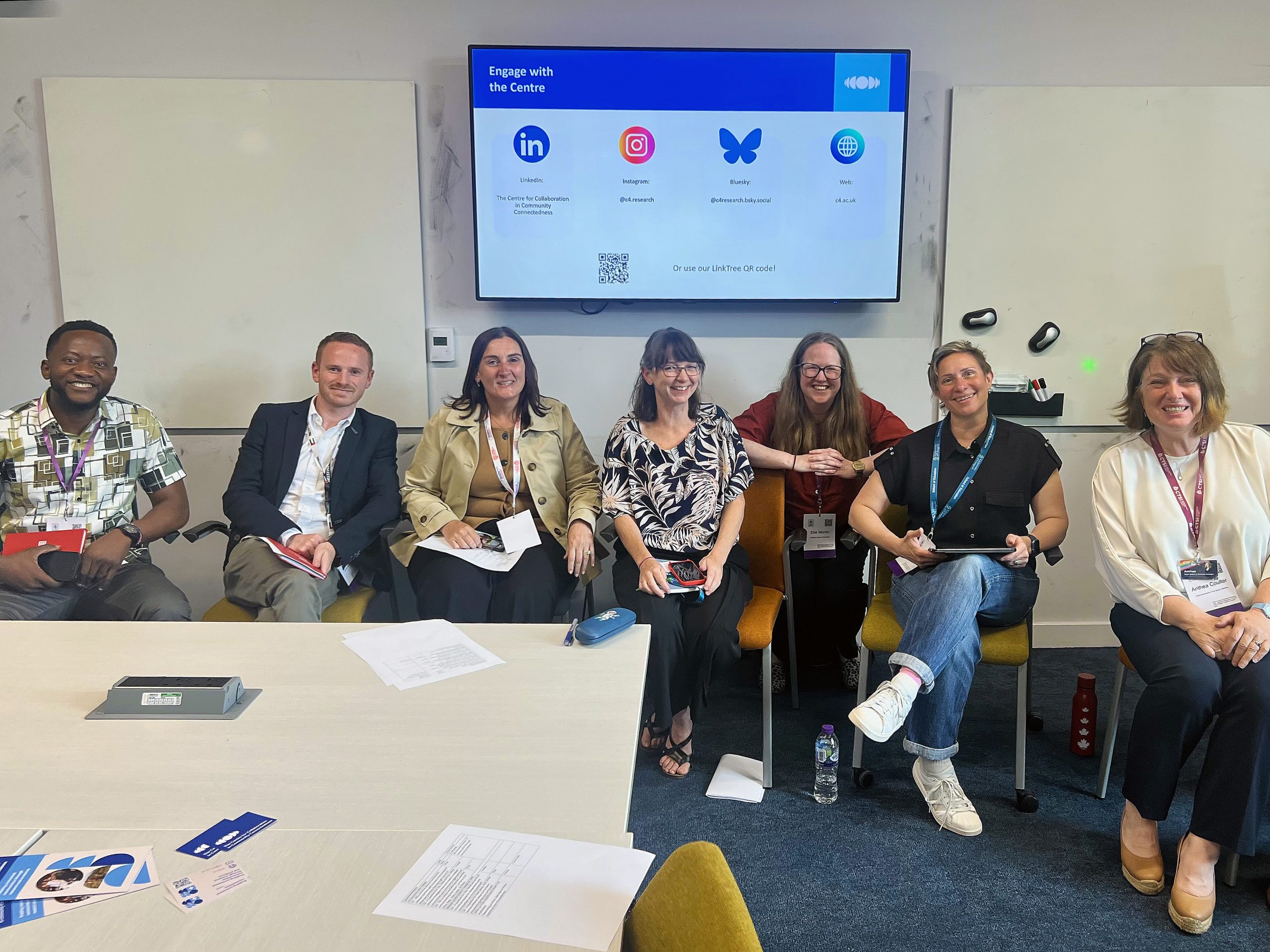 (Left to Right) Faraja Kirubi, Neal Halforty, Tracy Conlon, Vita Terry, Ellie Munro, Nic Dickson, Anthea Coulter.
(Left to Right) Faraja Kirubi, Neal Halforty, Tracy Conlon, Vita Terry, Ellie Munro, Nic Dickson, Anthea Coulter.
(Left to Right) Faraja Kirubi, Neal Halforty, Tracy Conlon, Vita Terry, Ellie Munro, Nic Dickson, Anthea Coulter.One of the lasting impressions I took away from World Community Development Conference (WCDC) 2026 in Glasgow is that some of the most meaningful learning happens through dialogue. Across keynote sessions, workshops, informal conversations and collaborative discussions, I was reminded that knowledge is rarely created in isolation. Instead, it emerges through relationships, critical reflection, and the willingness to learn with others.
As a PhD researcher at Sheffield Hallam University and a member of The Centre for Collaboration in Community Connectedness (C4), I found attending WCDC to be both intellectually stimulating and personally affirming.
The conference brought together researchers, practitioners, activists and community leaders from across the world, creating an environment where different experiences, perspectives, and forms of knowledge could meet in conversation. Rather than presenting fixed answers, participants collectively explored some of the most pressing questions facing community development today: participation, ethics, power, inclusion and social justice.
One of the highlights of the conference was the opportunity to co-facilitate the Centre’s panel session alongside Dr Ellie Munro, where we explored the experiences of C4’s embedded researchers and community partners. The panel included C4 community catapult partners Anthea Coulter from Clackmannanshire Third Sector Interface (CTSI) and Tracy Conlon from the Market Development Association, and embedded researchers Dr Vita Terry, Dr Nic Dickson and Dr Neal Halforty.
Rather than presenting completed research, the discussion focused on sharing the realities of collaborative practice, building relationships, navigating ethical complexities, and learning alongside communities rather than researching from a distance. Facilitating these conversations reminded me that some of the richest insights emerge when researchers create spaces for dialogue rather than simply delivering knowledge.
This experience echoed Paulo Freire’s understanding of education as a dialogical process, where knowledge is created with people, rather than transferred to them. Throughout the conference, I saw this philosophy reflected in countless conversations.
Whether discussing co-production, participatory research or community organising, there was a shared recognition that meaningful change begins by listening deeply, questioning assumptions and valuing communities as producers of knowledge rather than recipients of expertise. Many of these ideas were echoed in the reflections shared after our session by Dr Ellie Munro and Dr Vita Terry.
Despite working in different places and contexts, similar themes continued to emerge: the importance of deep listening, building relationships at the pace of trust, approaching ethics as an ongoing practice rather than a procedural requirement, and recognising that collaborative research is fundamentally relational.
These reflections reinforced an important lesson from the conference: that while methods and contexts may differ, the values underpinning meaningful community engagement remain remarkably consistent.
Beyond the panel, conversations throughout the conference returned to questions that sit at the heart of community development:
How do we genuinely share power?
How can research move beyond extractive models of knowledge production?
How do we create spaces where communities shape research agendas rather than simply contribute data?
These are not merely methodological questions; they are ethical and political ones. They invite us to reflect critically on whose knowledge is recognised, whose voices are heard, and how research can contribute to more just and inclusive communities.
One keynote in particular challenged participants to reconsider the language of community resilience. Rather than viewing resilience as helping communities adapt to unequal systems, we were encouraged to ask how community development could contribute to transforming those systems.
This perspective resonated with Freire’s concept of praxis, the continuous relationship between critical reflection and collective action. Community development, in this sense, becomes more than responding to challenges; it becomes a process of working with communities to imagine and create alternative futures.
These conversations have strengthened my thinking as I prepare for fieldwork exploring inclusive leadership, social connectedness and resilience among Maasai communities in northern Tanzania.
My research seeks to understand how leadership is experienced relationally and how Indigenous knowledge and local practices contribute to more inclusive forms of participation.
The conference reinforced my conviction that leadership should not be understood solely through formal authority or individual expertise. Instead, leadership emerges from relationships of trust, reciprocity and collective responsibility, qualities that enable communities not only to respond to change but also to shape it together.
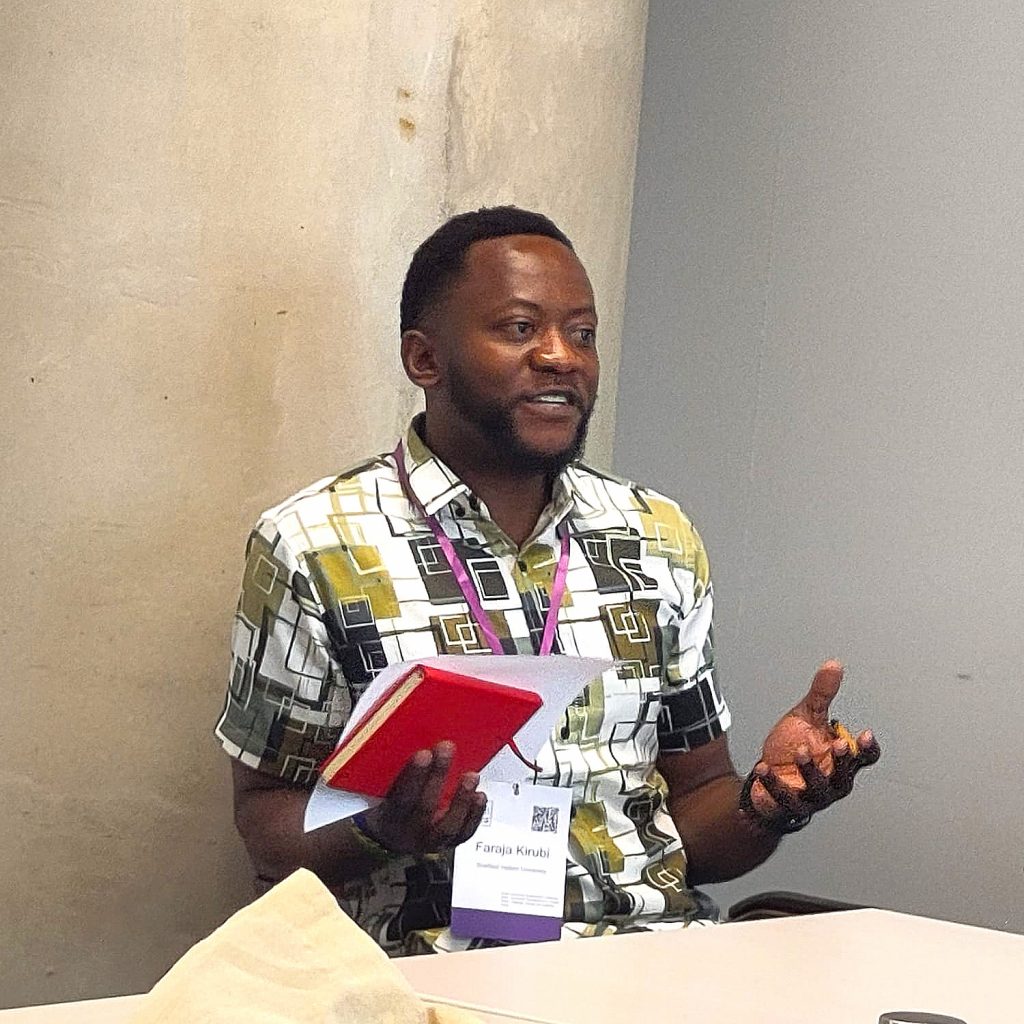
Some of the most valuable moments of the week happened away from the conference programme itself. Conversations over coffee, discussions between sessions, and encounters with colleagues from other countries often became opportunities for mutual learning and reflection. These informal exchanges reminded me that conferences are themselves communities of practice, spaces where ideas develop through dialogue and where future collaborations often begin.
As I returned to Sheffield, I found myself bringing home far more than conference notes. I returned with renewed motivation, new professional connections and a deeper appreciation of the values that underpin C4’s work and my own research.
The conference reaffirmed that meaningful research is built not only on rigorous methods but also on humility, reciprocity and a commitment to learning alongside communities.
Freire described hope not as passive optimism but as something we actively practise through dialogue and collective action. That understanding of hope became one of my most significant takeaways from WCDC 2026.
The conversations in Glasgow demonstrated that another way of doing research is not simply an aspiration; it is already being realised through collaboration, critical reflection and communities working together to create more connected, inclusive and socially just futures.
I am grateful to C4, Sheffield Hallam University, the conference organisers and everyone who contributed to making WCDC 2026 such an open, welcoming and inspiring space for dialogue, collaboration and shared learning.
Cite this Article:
Kirubi, F. (2026). Learning Through Dialogue: Reflections from the 2026 World Community Development Conference. The Centre for Collaboration in Community Connectedness. https://doi.org/10.7190/c4.2026.8588155494