31.03.2026
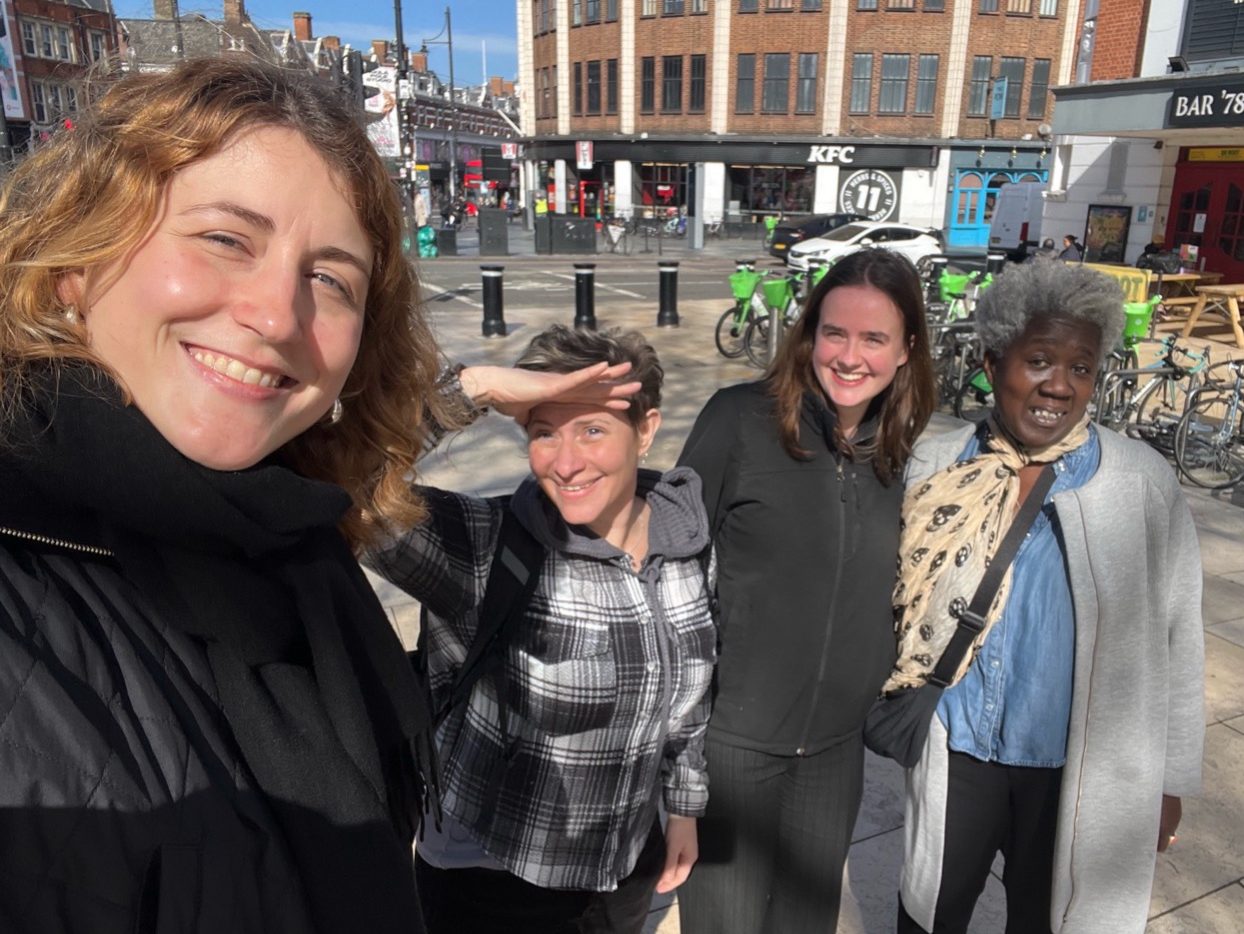 The Brixton Project team and Nic, the Community Embedded Researcher in Clackmannanshire, on a walk of the Brixton neighbourhood.
The Brixton Project team and Nic, the Community Embedded Researcher in Clackmannanshire, on a walk of the Brixton neighbourhood.
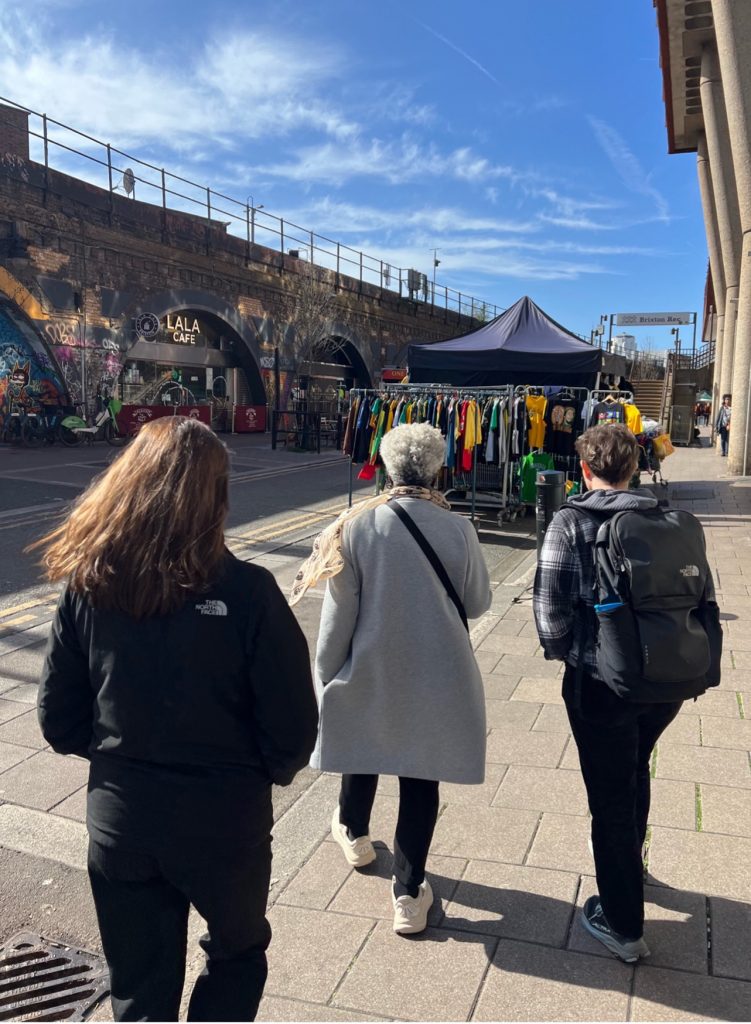
The Brixton Project team and Nic, the Community Embedded Researcher in Clackmannanshire, on a walk of the Brixton neighbourhood.It’s mid-March and it feels like the first spring day in Brixton. As I get out of the underground, I’m greeted by the usual hustle and bustle of Brixton. I walk through Brixton Station Road where market traders are setting up for the day, pass the Brixton Rec (Brixton Station Road can be seen in Picture 1), and a few steps later I’m standing in front of International House – home to the Brixton Project’s office.
International House tells you a lot about what’s at stake for community life in Brixton. A repurposed council building, it houses over 100 charities and grassroots organisations. Yet in 2027, these organisations will have to make way when the building is redeveloped into private housing. Local residents and tenants are campaigning against this, International House is one of the core pillars of Brixton’s community fabric, and its loss would leave the future of the many VCS organisations it currently houses uncertain.
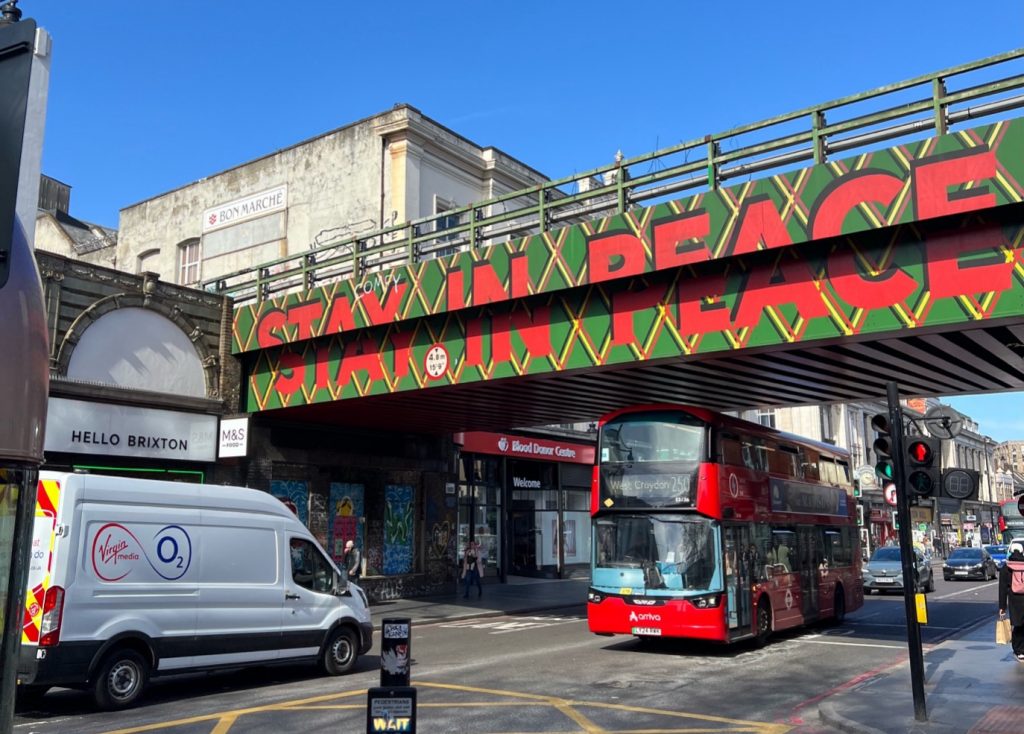
The Brixton Project has been based here since its early days. Founded in 2019 by Binki Taylor and a group of other local residents working across culture and the arts, the organisation has left a visible footprint across the neighbourhood, from artwork on Brixton Road Rail Bridge (see picture below) to work created with local primary school children celebrating Brixton’s rich music hall history. Over time, its mission has sharpened: not just making the area exciting for affluent newcomers, but ensuring it remains a thriving place for everyone, acknowledging its roots as a, at times ‘rebellious’, community that stands up for itself and, where needed, speaks truth to power.
I’ve been the Brixton Project’s embedded researcher for a few months now. In that time, the organisation ran the Community Research Exchange, a series of talks and discussions bringing together local residents, community organisations and funders to tackle topics like climate, community wealth and culture, with the aim of getting the right people around the table and developing real solutions.
But the day-to-day work of the Brixton Project is not only about public events but also about staying connected with organisations and people across Brixton. A typical day involves other community organisations dropping in, a local campaigner recording a podcast, or walking over to Lambeth Town Hall for a meeting with the council about coordinating VCS support in the borough. What stands out is the sheer range of people and organisations the Brixton Project stays in continuous communication with.
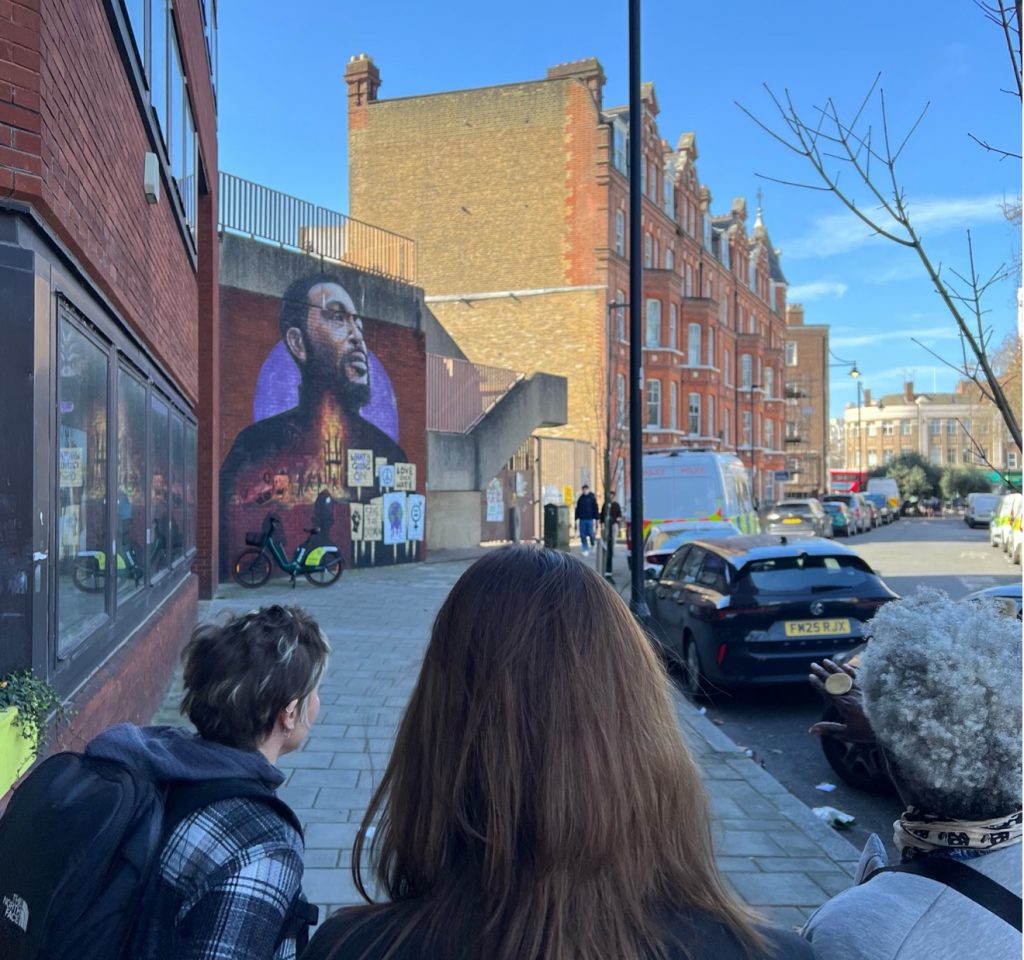
Today is no exception. Nic, the embedded researcher based at Clackmannanshire Third Sector Interface in Scotland, is visiting. Several people drop into the office over the course of the day, and Binki takes us on a tour of the neighbourhood to see some of the local artwork the Brixton Project has been involved in.
It’s exciting to talk to Nic about her experiences as an embedded researcher. Despite the very different contexts – a London neighbourhood and a small Scottish council area – we find many commonalities. We all recognise that community leadership should be shared, rather than rest on individual ‘community heroes’ to be sustainable. And we share the ongoing struggle of community organisations to remain financially viable in a brutal funding landscape.
So what is it actually like to be a community embedded researcher? From my experience so far, it’s about navigating the stark differences between two worlds: The academic world requires quiet time for reading, writing, reflecting and connecting observations to theory. The community world, on the other hand, is dynamic, often unpredictable and sometimes requires hands-on-support in the moment. The role is about giving time and effort to being present in the community organisation, while also creating space to reflect, make connections to existing research and consolidate what you’ve learnt.
As I grow into the role, I’m increasingly convinced that an embedded, organic approach to knowledge creation is the great advantage of this type of work. I suspect that Michael Burawoy, the great public sociologist, would have agreed: embracing embeddedness means letting the academic ‘hat’ take a back seat in in favour of practical, hands-on engagement. It is precisely this that enables us to reveal dimensions of community connectedness that traditional research cannot capture. By being practically embedded, showing up, and being part of the daily chaos of community life, we can come to understand community connectedness better.