06.03.2026
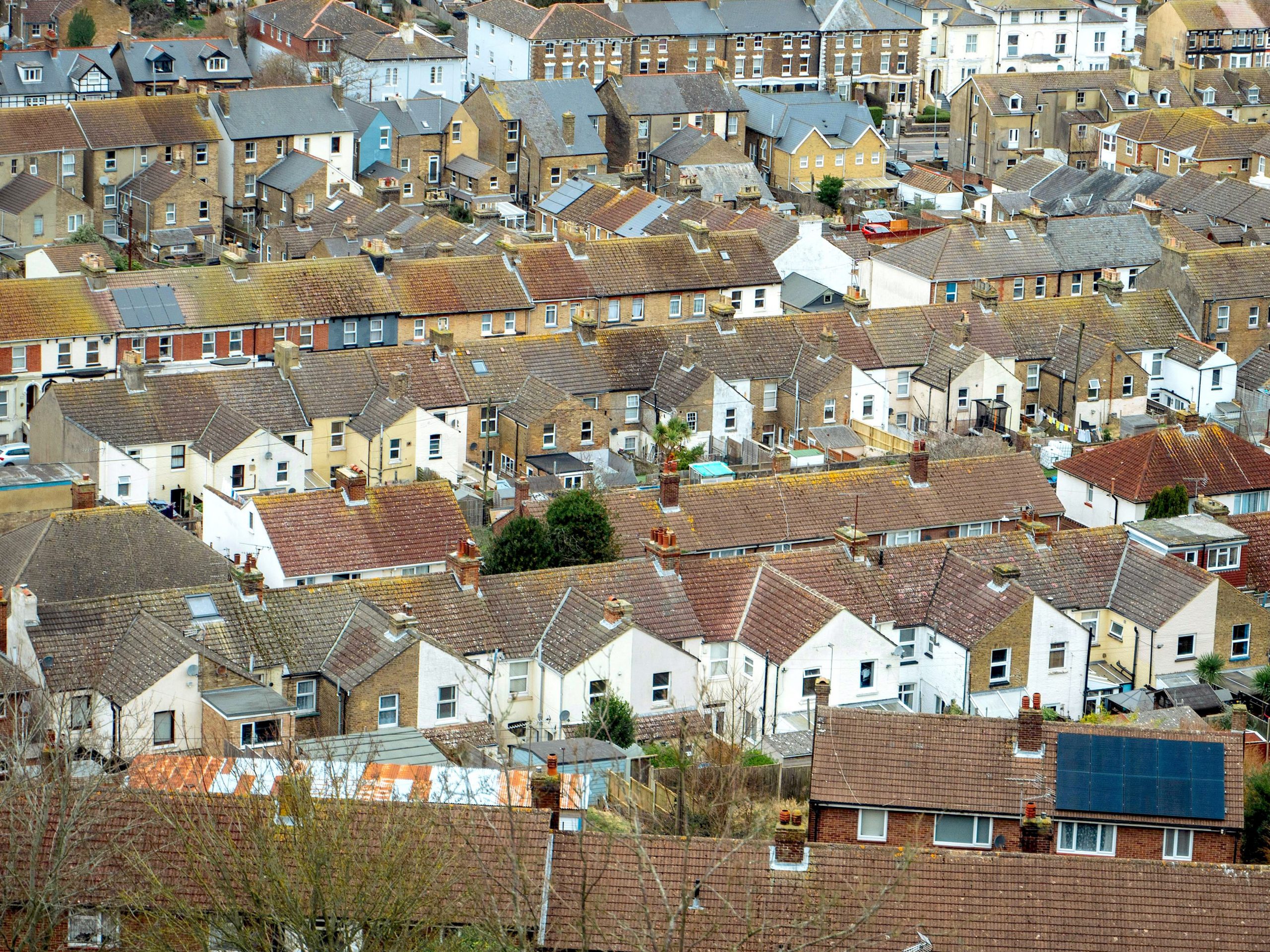 English Town. Image Credit: Daria Agafonova on Pexels.
English Town. Image Credit: Daria Agafonova on Pexels.
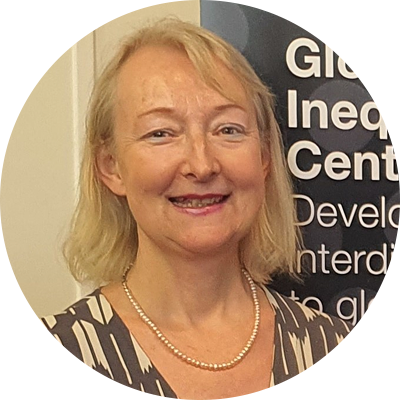
English Town. Image Credit: Daria Agafonova on Pexels.Hear from Professor Louise Ryan as she discusses her research working with Afghan Women in English Communities, as we celebrate International Women’s Day on 8th March 2026.
The collapse of the NATO-backed Afghan government in August 2021 triggered a massive humanitarian emergency. Along with many other countries around the world, the UK introduced schemes to relocate and resettle Afghans, especially those who had worked alongside international military forces and those who deemed at risk of Taliban reprisals, such as women’s rights lawyers and activists. By September 2025, approximately 40,000 people had received settlement in the UK and these schemes were closed to new applicants (1). Our multi-method research (2) seeks to understand how newly arrived Afghans are embedding in different localities across England.
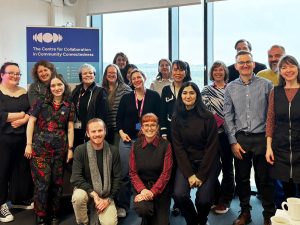
Forcible displacement can result in a powerful sense of ‘rupture’ as people suddenly lose everything associated with their former lives, identities and status. Moreover, when people have to move quickly and unexpectedly, they not only lose possessions but also inter-personal connections (3). Furthermore, those granted refugee status in receiving countries, are often dispersed by state agencies to particular locations, depending on availability of accommodation and support services, rather than any pre-existing social networks. Hence, refugees arriving in a new area usually need to rebuild networks, local attachments and their sense of identity in unfamiliar places. These questions about how people form new connections in new places are especially pertinent to the work of The Centre for Collaboration in Connected Communities.
Using walking interviews, our Nuffield-funded research project seeks to understand how Afghan women are embedding in neighbourhoods across various geographical sites. Although we intended to interview 25 women, in the course of recruitment, we were put in touch with one non-binary person who was keen to participate. Therefore, we had 26 Afghan participants. Through the conceptual framework of embedding (4), our analysis reveals multi-layered, differentiated and dynamic processes of forging attachments and belonging, and the opportunities and obstacles afforded within specific spatial and temporal contexts.
As we walk around their neighbourhoods, participants narrate their everyday experiences as they sought to rebuild their lives in unfamiliar places. Participants expressed gratitude to the UK government for evacuation and resettlement. Zamina, after her families’ traumatic evacuation from Kabul said ‘we can sleep peacefully in our beds’. Nonetheless, it was not easy to adjust to their new lives here. Marya told us that she had ‘no idea how to live here’ and was ‘starting my life from zero’. Jaheda, who had been a midwife in Afghanistan, also mentioned starting from zero and, given her former occupation, she used an apt metaphor that she and her family were ‘starting like newborn babies here’.
While many feel welcome and supported by local agencies, including councils’ resettlement teams, some also face isolation and loneliness in their new neighbourhoods. Sarah, a young student, her parents and siblings were housed in a remote village in the North of England. There were no amenities in the village and, although Sarah spoke good English, she had no opportunities to interact with neighbours.
“I feel very lonely because there’s no friends of mine, so no one is here, because it’s very difficult if you don’t have any friends.” – Sarah
For others, language is a challenge to forging new local connections. Madina, who was resettled in a small town, does not speak English and cannot communicate with neighbours. She feels lonely and craves companionship but ‘there is no other Afghan family around’. Meanwhile, in London, Tamana, a young mother, is alone all day with her baby and toddler, whilst her husband works long hours. She misses the companionship of extended family in Afghanistan. However, she feels lucky to have made new friendships with other resettled Afghan women. They meet at ESOL classes, organised by the local council, and in parks; chatting whilst the children play. Tamana told us that without these friends she would ‘go crazy here’.
But that is not to suggest that all resettled Afghans are seeking co-ethnic friendships. Some participants are keen to forge new connections. Mashal, aged in their early 20s, identified as non-binary and had been evacuated from Afghanistan along with 30 or so LGBTQI+ people. Thus, their arrival in the UK was associated with a strong sense of safety and security. Mashal was housed by a local authority in a building with many other Afghan families. Feeling watched and judged by neighbours, Mashal started to disguise their appearance. ‘it’s really hard for me… Every time I walk out of my flat, I have to put this fake mask on…I dress completely different.’ Paymana is a single woman in her late 20s, who chooses not to wear the hijab. She was offered accommodation in a London borough where many ‘Pakistani and Afghan people’ live. She declined that offer and instead moved to a town in the south-east of England where she feels more able to express her identity.
Thus, personal preferences and identifications shape how diverse Afghan participants are embedding relationally within neighbourhoods. Some appreciate opportunities to forge local Afghan networks, for friendship and emotional support, while others are keen to avoid co-ethnic neighbours due to concerns about judgement and pressure to conform to ‘traditional’ values. Consequently, the same neighbourhood may be experienced very differently.
Applying the conceptual framework of embedding provides insights into complex, multi-dimensional, dynamic and contingent processes through which participants are navigating resettlement spatially and temporally. Specific geographical locations present opportunities but also obstacles for embedding, depending upon infrastructures and amenities where new connections can be forged. However, local contexts can also be experienced as hostile and unwelcoming. Some participants described instances of racism and Islamophobia. For example, in her town, Gulshan encountered an abusive woman in a supermarket: ‘One lady said I should take off headscarf. She was shouting…I was very scared’. In most cases, participants described these as isolated occurrences associated with a rude or unpleasant individual. However, the events that could not be dismissed as isolated individuals, were the racist riots of 2024.
Local places are situated within wider socio-structural contexts. Macro contexts, including anti-migration rhetoric and policies, can fuel distrust or negative stereotyping of particular ethnic or religious minorities, impinging upon local opportunities for embedding. The racist, anti-migration riots that erupted across many English towns and cities in summer 2024, emerged as a powerful theme in the Afghan narratives.
Layla, who was resettled with her family in a small seaside town, stated: ‘we were all afraid’. Whilst travelling from her ESOL class by bus, she observed protesters and was terrified: ‘in the evening, I left college to come home I see some people … they have signs…using bad words to refugees’. In many cases, participants described remaining at home whilst the riots took place: ‘more than one week I stay at the house… I feel maybe someone attack me’ (Sadia).
For people who fled their native country and arrived in the UK seeking safety, anti-migration discourse and violence can have re-traumatising impacts, as clearly shown by the palpable fear expressed by women like Sadia and Layla who were afraid to leave their homes. This example points to the wider structural factors that can disrupt and undermine fragile embedding. Thus, rather than simply assume that people will settle over time, it is necessary to consider conditions that can support or hinder processes of embedding.
Of course, embedding and forging new local connections takes time. These participants are still at early stages of resettlement. Many had lived in their neighbourhoods for less than two years. Working with them longitudinally will continue to add insights into how their embedding is evolving over time.
You can read ‘Walking with Afghan women: using mobile methods to understand differentiated embedding within different places across England’, co-authored by Professor Louise Ryan, here.
References
Based on the recently published paper: ‘Walking with Afghan Women: using mobile methods to understand differentiated embedding within different places across England’ by Louise Ryan, María López and Mursal Rasa (2026) in Journal of Ethnic and Migration Studies.
(2) The paper draws on one strand of a large, mixed methods study ‘Afghan Resettlement in England: Experiences and Opportunities’, funded by the Nuffield foundation (2024-2026). The views expressed are those of the author and not necessarily the Foundation. The wider research team: Caroline Oliver (PI), Mustafa Raheal, Mursal Rasa and Olga Cara (University College London), Louise Ryan and Maria Lopez (London Metropolitan University), and Janroj Keles (Middlesex University).
(3) For an overview of the academic literature see Ryan, L., López, M., Dalceggio, A., & Adell, F. (2025). ‘You Need a Network’: How Highly Skilled Refugees Build Social Networks to Convert Cultural Capital and Reclaim Professional Identities. Sociology, https://journals.sagepub.com/doi/full/10.1177/00380385251363897
(4) Ryan, L. (2018). Differentiated embedding: Polish migrants in London negotiating belonging over time. Journal of Ethnic and Migration Studies, 44(2), 233-251. https://www.tandfonline.com/doi/full/10.1080/1369183X.2017.1341710
Photo by Daria Agafonova from Pexels: https://www.pexels.com/photo/charming-aerial-view-of-historic-uk-town-29854223/