14.05.2026
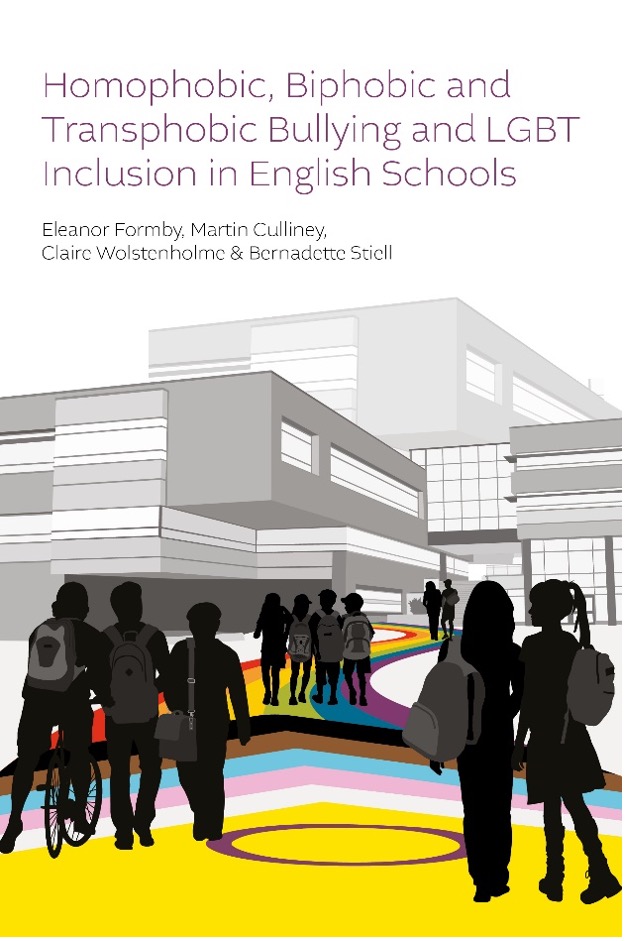
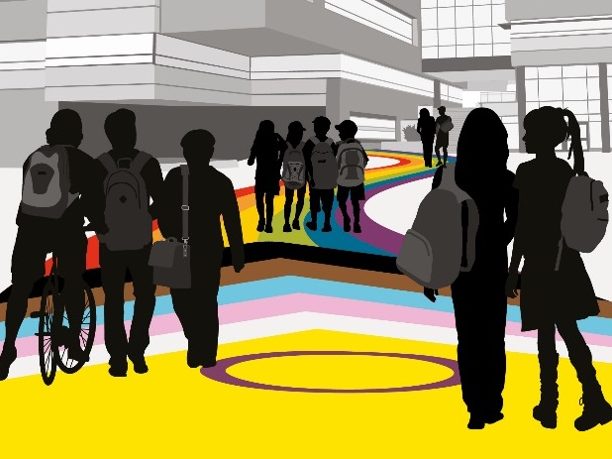 An illustration from the cover of 'Homophobic, Biphobic and Transphobic Bullying and LGBT Inclusion in English Schools'.
An illustration from the cover of 'Homophobic, Biphobic and Transphobic Bullying and LGBT Inclusion in English Schools'.
An illustration from the cover of 'Homophobic, Biphobic and Transphobic Bullying and LGBT Inclusion in English Schools'.May 17th is International Day Against Homophobia, Biphobia and Transphobia (IDAHOBIT), which marks the World Health Organisation’s 1990 decision to remove homosexuality from its International Classification of Diseases. Since then, the UK has seen significant legal and policy changes relating to LGBT rights. In 2015, the UK was ranked number one on the ILGA-Europe Rainbow Map, which rates 49 European countries on the basis of laws and policies that directly impact on lesbian, gay, bisexual and trans (LGBT+) people’s human rights. Around that time, the UK government invested over £6 million in initiatives to prevent and respond to homophobic, biphobic and transphobic (HBT) bullying in English schools, including the largest known study of HBT bullying and LGBT inclusion in English schools, conducted by myself and colleagues at Sheffield Hallam University. The research included almost 62,000 pupils and staff from 853 schools, demonstrating that schools are not just places of learning, but communities: environments where young people come to understand whether they belong, whose identities are recognised as legitimate, and whether it is safe to be themselves.
In 2019, new statutory relationships and sex education guidance was released in England (for secondary schools, and relationships education for primary schools). This included the statement that all pupils should be taught LGBT content “at a timely point”. For a while, there was reason for cautious optimism about LGBT inclusion in English schools.
Our research showed that HBT bullying exists, but that relatively small, intentional changes can make a difference. Importantly, this bullying does not only affect LGBT+ young people. Non‑LGBT+ pupils described distress at witnessing friends being targeted, and frustration that schools did not always respond. As one young person put it:
“I can’t stand witnessing my friends be bullied because they are a part of LGBT… I don’t understand why our school won’t accept the fact that the LGBT is a real community that exists within our school.”
When pupils experience bullying or exclusion, it weakens the sense of school as a shared community.
Across staff and pupil survey responses, fewer than half felt that their school actively tried to build an LGBT‑inclusive environment. Those who identified as LGBT+ were less likely to feel that their school succeeded in doing so. A lack of visibility and affirmation mattered deeply to young people. A secondary school pupil commented:
“I would love to be able to say I am out and proud at school… but I sadly don’t feel that way… I feel ashamed of who I am at school because there is nothing telling us that we are valid and ‘normal’”.
A school cannot meaningfully describe itself as a community if some members do not feel safe, recognised or able to participate fully within it.
LGBT inclusion work in schools is often tied to specific days or months – LGBT history month, IDAHOBIT, Pride, or anti‑bullying week. Whilst these can be useful starting points, they can also unintentionally position LGBT visibility as something temporary or exceptional, with invisibility the norm the rest of the year. For pupils, belonging is built through everyday practices and messages, not just through occasional special activities.
There is also a risk that inclusion work becomes framed almost entirely through bullying and harm. Anti‑bullying initiatives are often seen as an acceptable way to introduce LGBT content into schools, but this can mean that LGBT identities appear only in relation to risk or victimhood. As a pupil remarked:
“The few assemblies we’ve had raising awareness… have focussed on the negative sides of LGBT, and as important as it is to educate against bullying, I have never had any situation where we’ve been shown that there is a positive side to being LGBT too”.
For school communities to be genuinely inclusive, LGBT+ young people need to be visible as whole people, not only as potential victims.
Schools that are better supported, for example through staff training, guidance on policy formation, and access to specialist advice, are more able to create environments where young people feel comfortable asking questions, and sharing information about their lives and families. This strengthens school communities as a whole.
However, last year the government revised its guidance on relationships and sex education. Drawing comparisons with Section 28, it significantly reduced references to trans people (now just once in a subheading), and states that schools “should not teach as fact that all people have a gender identity”, and “should avoid materials that… encourage pupils to question their gender”. This occurred within a wider set of legislative and policy changes affecting trans people in particular. In the 2025 ILGA Europe Rainbow Map, the UK had plummeted to 22nd place. We’re now the second worst country in Western Europe and Scandinavia for LGBT-related laws.
In an ideal world, LGBT inclusion would not be short-term, or an ‘add on’. But instead of supporting schools to become more inclusive communities, recent guidance risks making things worse for LGBT+ young people, and those with LGBT+ family members. Teachers are left uncertain about what they are permitted to say or teach, and pupils may feel more isolated as a result. If we want young people to learn how to live respectfully and compassionately with others, schools need support, clarity and resources to ensure that all pupils, regardless of identity or family background, can feel safe, included and connected.

Eleanor Formby is Professor of Sociology and Youth Studies at Sheffield Hallam University. You can buy Eleanor’s new book here.
Cite this Article:
Formby, E. (2026) Marking IDAHOBIT: What LGBT+ Young People’s Experiences Tell Us About School Communities. The Centre for Collaboration in Community Connectedness. https://doi.org/10.7190/c4.2026.1877175668