Sometimes the most urgent thing we can do is slow down.
“The times are urgent; let us slow down.” – Bayo Akomolafe
When I first arrived in Talgarth as an Action Research Fellow at Black Mountains College, I carried more questions than answers.
Over the next four years, I’ll be supporting community-led research that explores what helps build stronger, more connected communities, but before any research could begin, I found myself asking a different question:
How do I create a strong foundation with the local community built on trust and rapport for the next four years?
It’s a question that has stayed with me over the past eight months. Watching fellow embedded researchers work in very different communities has reminded me that there is no universal blueprint for community engagement. Every place has its own history, relationships, tensions and strengths. The ways people have experienced change, power and trust shape how they respond to local community action. I quickly realised that if I wanted this work to be meaningful for the local community, I couldn’t rush towards solutions. I needed to begin by deep listening based on empathy, curiosity and reflexivity.
Deep listening
Talgarth, a rural mid Wales Town, nested in the beautiful National Park was new to me. Rather than organising meetings or engagement events straight away, I spent my first months having informal discussions with as many different local residents as possible. Walking around the town, attending local activities, listening without an agenda. I heard several important stories of place in Talgarth.
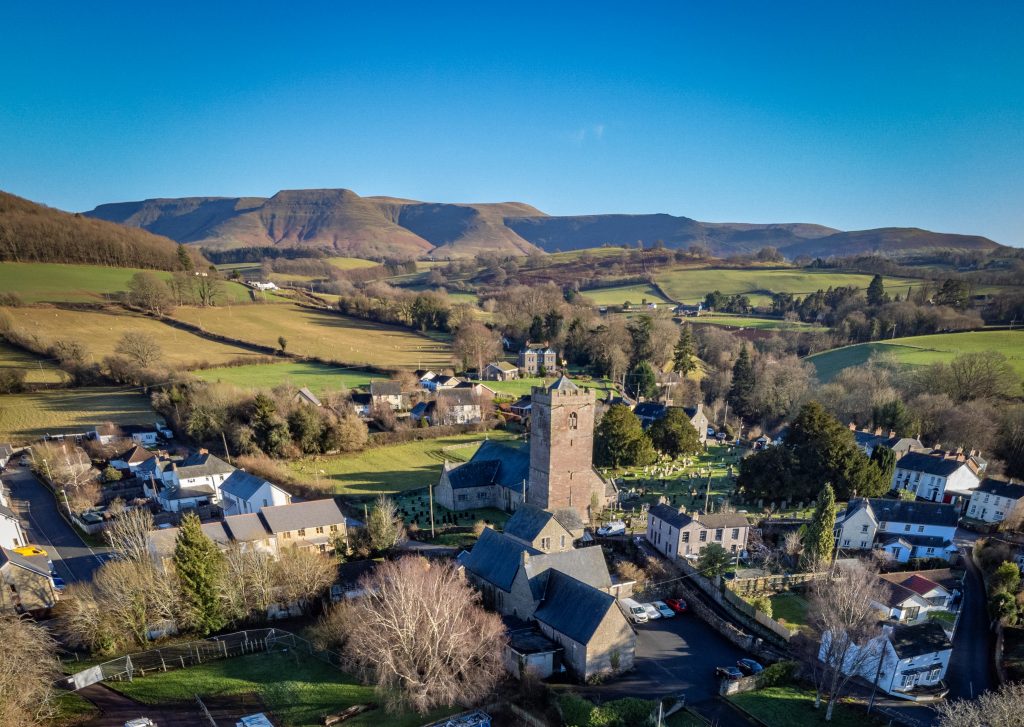
I heard immense pride in the town’s community spirit and the rich tapestry of community action in a relatively small town. Many of the residents wear multiple hats volunteering for different groups or activities within the community.
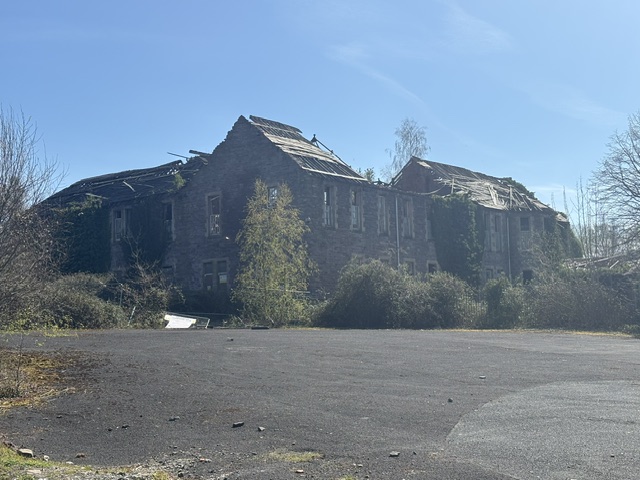
Alongside that pride, however, I also heard about loss. Many people spoke about the closure of the Mid Wales Hospital in 1999 – not simply as the loss of a building or employer, but also a place where generations gathered to socialise and a source of identity. A history of promises to regenerate this building that never materialised has understandably created a level of scepticism whenever new projects appear in Talgarth
I also became aware of quieter tensions surrounding demographic changes and the arrival of new residents, often referred to as ‘blow-ins’. While rarely spoken about directly, these dynamics formed part of the landscape I needed to understand.
Building on what already exists
Too often, community engagement begins with events, surveys or consultations before relationships have had the chance to develop. People become tired of being asked for their views without seeing meaningful change.
Instead of asking people to come to me, I went to them. Before organising any community event, I carried out a micro mapping exercise to understand the existing voluntary and community landscape. Formal datasets offered one perspective, but the real picture emerged through conversations and walking around the Town identifying adverts for local activities.
Those conversations with local residents and groups served several purposes. They helped shape the agenda for future discussions around issues people themselves identified as important. They created opportunities to build personal relationships before inviting people into a larger process. Perhaps most importantly, they reached people who would never have responded to a poster on a noticeboard or a social media post. The process took time but has been essential in putting those foundations in place.
Insights from the Connecting Talgarth event
One of the greatest privileges of working in Talgarth has been discovering just how much is already happening beneath the surface. Community conversations facilitated by PAVO had already highlighted that Talgarth is rich with volunteers, organisations, informal groups and local leaders who care deeply about their community.
The challenge wasn’t a lack of activity. It was that much of this activity happened independently. Many groups were solving problems, supporting residents and creating opportunities without necessarily knowing what others were doing. The town was full of energy, but those efforts weren’t always connected.
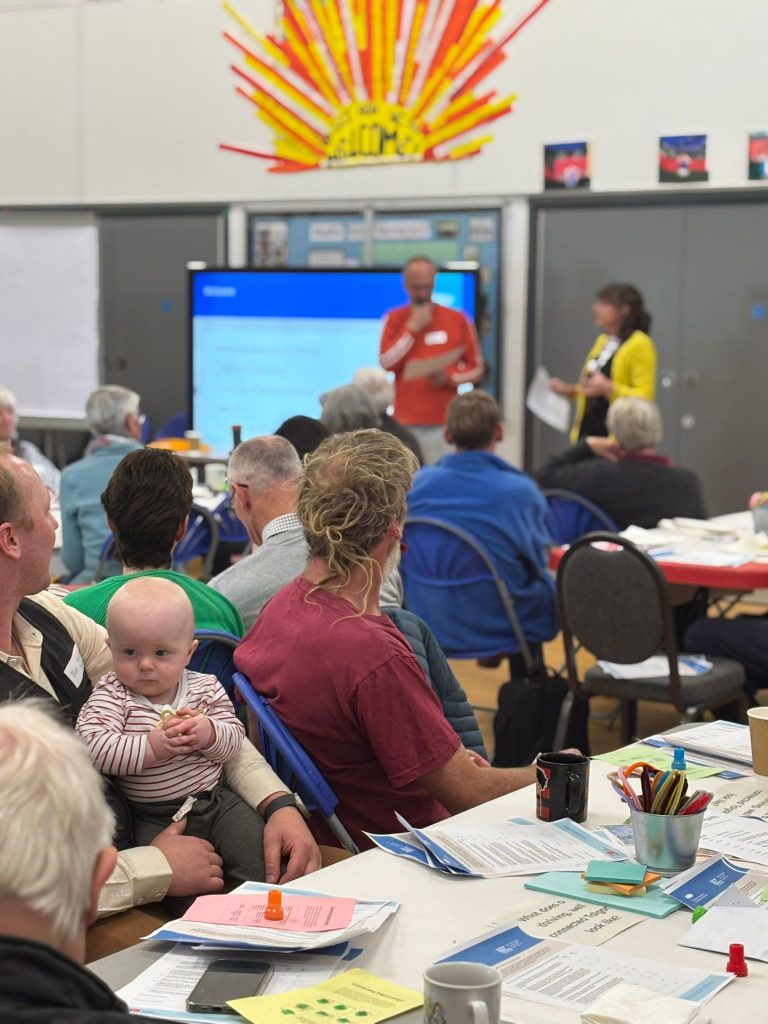
Working alongside PAVO, Black Mountains College, The Centre for Collaboration in Community Connectedness, Talgarth Town Council, Talgarth and District Regeneration group and local groups and residents, we designed the Connecting Talgarth community event aimed to create a space for people to meet, learn from one another and begin imagining what might be possible together.
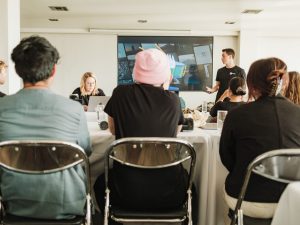
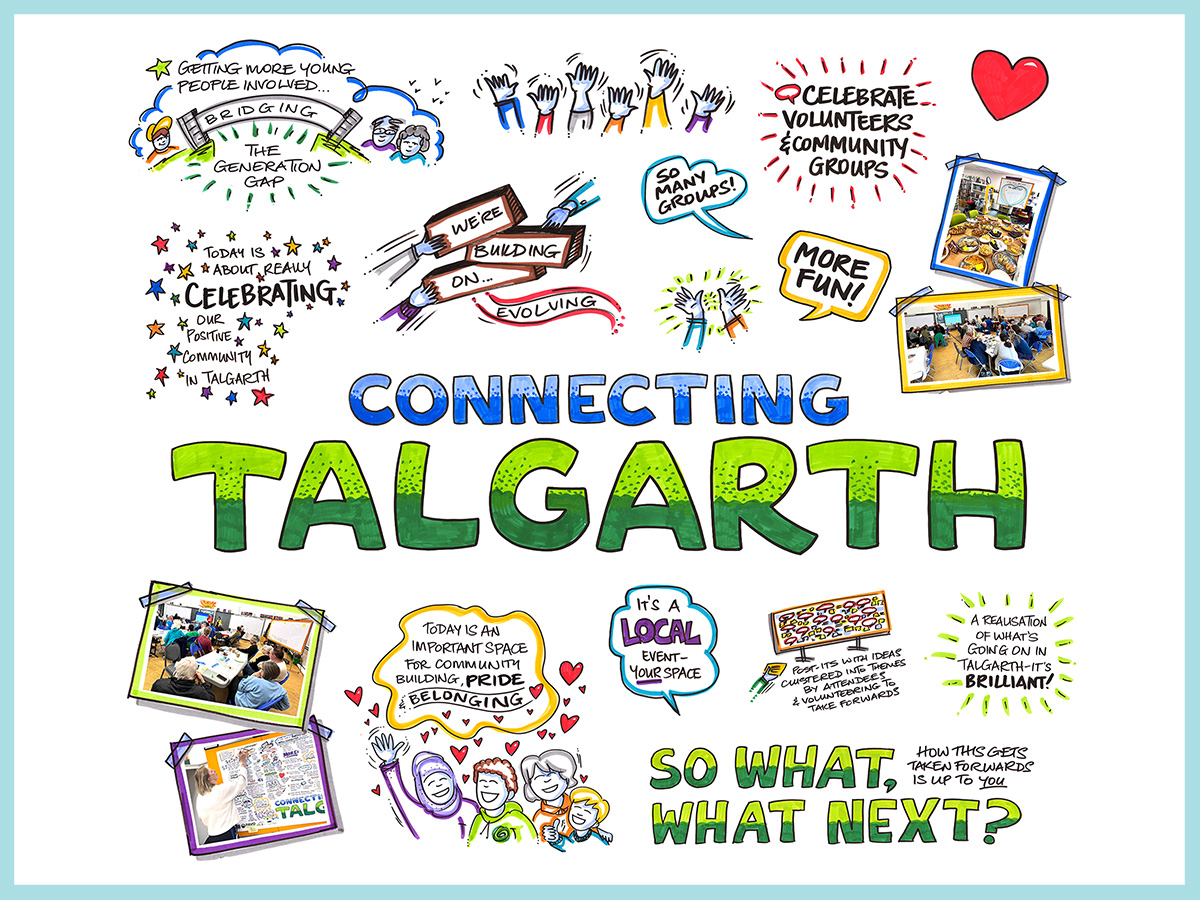
Around fifty people representing more than thirty organisations came together one Sunday afternoon. There were facilitated conversations, creative activities, networking and opportunities to explore what makes Talgarth strong, where challenges remain and what opportunities lie ahead. Connections were made between groups who had existed side by side for years but had never spoken. A visual artist captured the conversations as they unfolded, helping people see their collective thinking emerging in real time.
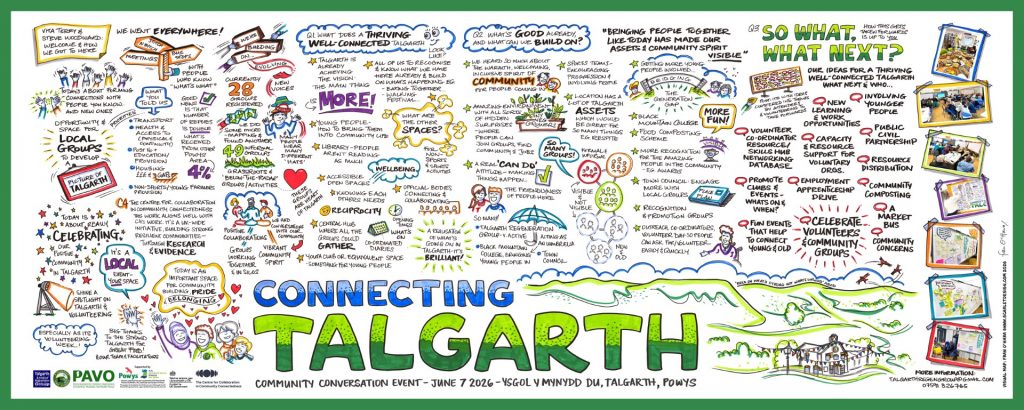
The conversations at Connecting Talgarth didn’t produce a list of recommendations or a neat action plan. Instead, they surfaced seven insights and questions that invite further conversation rather than provide definitive answers. They represent themes that emerged repeatedly throughout the day and, perhaps more importantly, reflect the lived experience of those who know Talgarth best.
1. Talgarth is rich in community action
One of the most striking findings was the sheer scale of community activity already taking place. Through the mapping exercise, we identified 77 voluntary and community groups, organisations and initiatives operating across the town. From environmental projects and sports clubs to wellbeing initiatives, arts groups and informal neighbourly support, Talgarth is far from lacking community action. The challenge is not creating community spirit from scratch, but recognising, celebrating and building upon what already exists.
How can the expertise, knowledge and experience already present within the community play a greater role in shaping local decision-making and future development?
2. Strength exists alongside fragmentation
At the same time, many participants described a community that is incredibly active but not always well connected. Groups often work tirelessly within their own networks, unaware of similar projects happening just down the road. This isn’t a criticism of those organisations – it reflects the reality of busy volunteers with limited time and resources.
There is enormous potential in creating more opportunities for groups simply to know one another, share learning and collaborate. Sometimes the most valuable outcome isn’t creating something new, but helping existing initiatives work together more effectively.
How can local community groups and stakeholders share learning and build on effective practice to strengthen collaboration, connection, and collective action?
3. Informal community action is a hidden asset
One of the biggest surprises for me was discovering just how much happens beneath the radar. Many of the activities identified weren’t formal charities or constituted organisations. These groups often work ‘below the radar’ and may not be visible in formal planning processes, yet they play a vital role in supporting people, building belonging and strengthening community resilience. Recognising and supporting these informal networks is likely to be an important part of Talgarth’s future development.
What kind of shared infrastructure or support is needed to strengthen the voluntary and community sector in Talgarth, and how can this be developed while respecting the diversity of existing groups?
4. Relationships are infrastructure
The strongest message of the day was that relationships matter.
Participants consistently spoke about trust, kindness and personal connections as some of Talgarth’s greatest strengths. These relationships enable people to respond during difficult times, organise community activities and support one another through everyday challenges.
The findings suggest that social infrastructure – the relationships between people and organisations – is just as important as physical infrastructure and building trusted relationships was an area that required further progress.
How can local groups and organisations foster more relational ways of working, grounded in deep listening, empathy, trust, and genuine human connection?
5. Place shapes identity
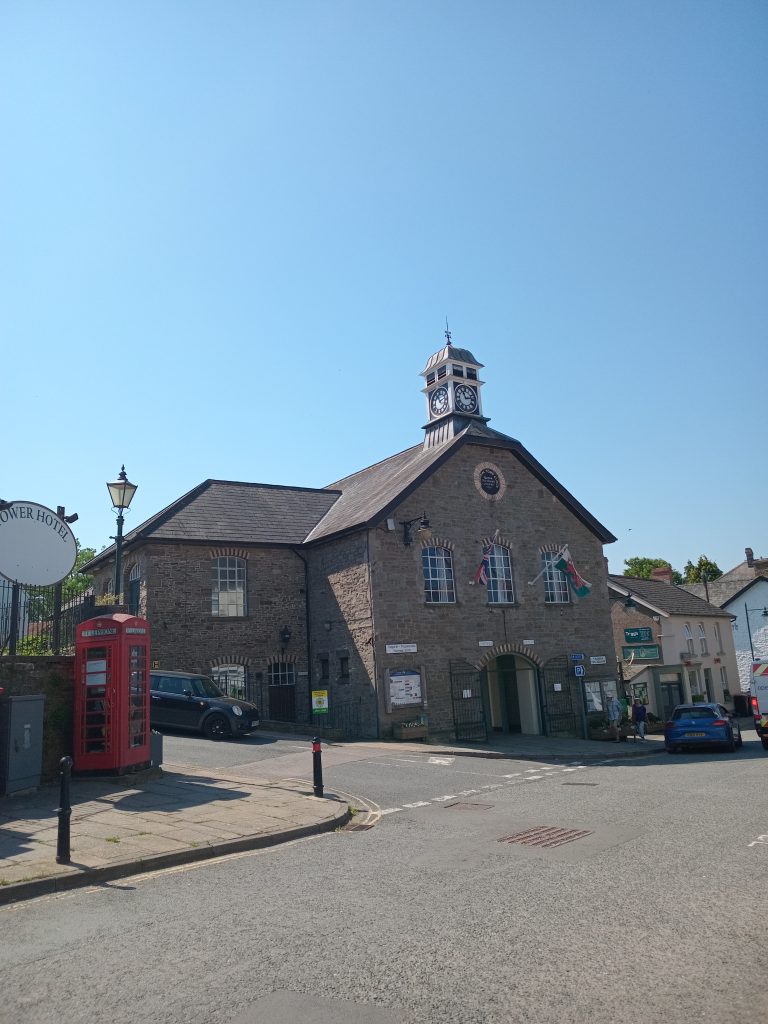
Again and again, people spoke about Talgarth with deep affection. The surrounding landscape, the Black Mountains, the historic mill, the Town Hall, the library, and other shared spaces were described not simply as physical assets but as places that give meaning, provide a form of connectivity, and identity to community life.
While it is important to celebrate the successes, it is also important to understand the different stories of a place including what has been lost and mourned, what needs repair and healing, and those that capture the community spirit to act as a catalyst for collective action.
How can we create opportunities for people from all parts of the community to share and celebrate their cultural heritage, values, identities, and connections to place?
6. Inclusion remains an ongoing challenge
Although there was a strong commitment to building an inclusive community, participants recognised that not every voice is equally represented.
In particular, discussions highlighted the importance of engaging younger people, under-represented groups and those who may not currently participate in community activities. There was some discussion about developing opportunities for more intergenerational activities/ projects to take place.
Which voices are currently under-represented in community conversations and what might be learned from engaging them more fully?
7. There is a desire for shared direction
People were not calling for a single project or initiative. Instead, there was a strong interest in developing a clearer understanding of shared priorities, increasing awareness of what other community activity is taking place, and creating a collective sense of direction. Many of the ideas discussed- whether about volunteering, young people, community event, economic opportunities- can be understood as different expression of a broader question about how community effort is connected and aligned.
How can we co-create a community led strategy, grounded in values and aspirations, to shape a collective vision for collective action?
What next?
Looking back over these first eight months, I realise that my understanding of community engagement work and its relationship with time, trust and patience has become firmly solidified.
Key learning from the process was to first undergo a process of deep listening, to work with the community to co create and co deliver the community engagement event, to build on what’s already happened and meet local need, and spot opportunities to piggyback on to not over burden the community.
Using a diverse range of engagement methods (event, flyer drop, informal conversations, feedback sessions etc) has been essential to reach those that might not otherwise engage. Most importantly, to see the process of building trust and positive rapport as just as important as any output or outcome.
One of the Connecting Talgarth events biggest achievements was creating space for a diverse range of people and organisations to come together in a positive and constructive environment. For me, these seven insights feel less like conclusions and more like invitations for the community to explore together. They not only provide a foundation for the next stage of the research and but also remind us to authentically listen to the communities voice to inform decision making that will impact their lives.
If you would like to read more about the Connecting Talgarth event and what was discussed please see the full report here.
If you would like to get in touch or find out more about the research in Wales please contact Vita on vita@blackmountainscollege.uk
Cite this Article:
Terry, V., (2026). Reflections on Connecting Talgarth: Vita Terry. The Centre for Collaboration in Community Connectedness. https://doi.org/10.7190/c4.2026.3300305758